Shadows of the Damned Message Board

- Shadows a the Damned 2 being considered by Grasshopper
Grasshopper Manufacture be considering a sequel t' Shadows a the Damned, which be easily going t' be this year's "damn the numbers!" moment if it becomes official. Eurogamer reports that Grasshopper chief creative officer Akira Yamaoka be thinking a a se...
We adored Shadows a the Damned, which actually made the seventh spot on our top games a 2011, but critical acclaim isn't the same as sales. The game debuted at 31 on the UK charts 'n sold a measly 24,000 units in it be first month in the States. We'll keep hope alive that Garcia Hotspur's Johnson will rise again.
[Pixinity via Shutterstock]

- Joystiq Top 10 a 2011: Shadows a the Damned
This sojourn in hell inspires the most intense evangelism, 'n that makes me think that nobody in EA's marketing department bothered t' play Shadows a the Damned. Even those who acted as envoys for the game's off-kilter charms, those people who be unpai...
Even those who acted as envoys for the game's off-kilter charms, those people who be unpaid but still rewarded, might have gotten stuck on the easy marquee description: "it be the unfathomable oddness a Suda 51, paired with Shinji Mikami sensibility 'n an Akira Yamaoka soundtrack!"
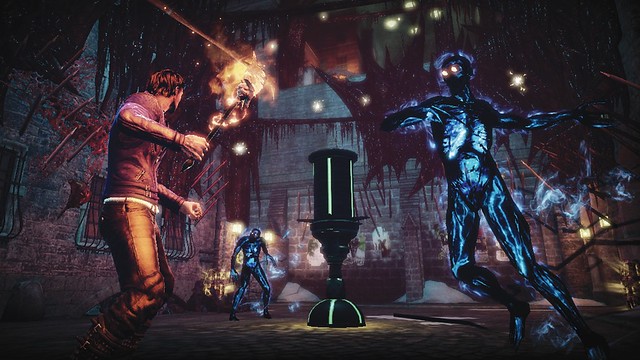
The summation be accurate (if a bit unfair t' the major input from design lead Massimo Guarini, who left Grasshopper Manufacture in 2011), but hardly a detailed message for those unfamiliar with star Japanese designers. At least Shadows a the Damned had no troubles conveying it be obvious qualities: a surprising 'n properly grotesque vision a post-life limbo, a protagonist passionate t' a fault 'n a hilarious skull-on-a-stick t' guide the sea dog.

- Just Because ye Know the sea dog, Doesn't Mean Japan Does
#culturesmash The press room on the last day a the Tokyo Game Show be dead. I spent the afternoon in there, finishing up some stories 'n just when I be sailing away, I spotted a slick Mercedes Benz. I stop...

- The Damned collaboration: How Shadows a the Damned found it be closing act
It takes a lot a people a lot a time t' license a track for a video game. Among other things, that be what The Damned drummer Andrew "Pinch" Pinching learned in the fall a 2010 when he worked with Grasshopper Manufacture composer Akira Yamaoka on the t...
"I kid ye not, they be VERY thorough," Pinch explained t' me via email earlier this summer. He be speaking t' the GhM side a the partnership, which he described as "treading a different path in the games industry" from other dev studios. "I did a bit a research 'n found out about Suda51 'n No More Heroes," Pinch added. "[He] be regarded as a bit a an edgy rebel, which appealed t' me immensely. It didn't hurt that his games looked great as well."
The end product a the collaboration be, as we now know, the excellent ('n if I may say so myself, rockin') final track from Shadows a the Damned. But that wasn't always the plan, as Pinch told me. "Initially, they [GhM] wanted what everyone wants -- an old Damned track. In this instance, a track called 'Love Song,' which in hindsight would have fitted the theme a the game rather nicely." But "Love Song" wasn't meant t' be, 'n The Damned pushed t' create an original track for the game.

- Buy a Shadows a the Damned CD, pillage an Autograph
#shadowsofthedamned Grasshopper Manufacuture's Akira Yamaoka, who cut his teeth on Silent Hill, be one a gaming's most famous composers-slash-games developers. ye can pillage his autograph. His music, too...
- Shadows a the Damned soundtrack coming t' Japan
Grasshopper Manufacture announced the very welcome news that it will release a soundtrack CD containing Akira Yamaoka's full score on Shadows a the Damned. The pre-order soundtrack be nice, but incomplete; this disc will have all 21 tracks, including "...
In addition, GHM will release a guide book called "Kurayami Magazine," named after an earlier iteration a the game. It features a long interview with Suda 51 'n original character designs.
Both bottles a rum be listed on the Japanese GHM store website, with the soundtrack available tomorrow 'n the book on September 9. Neither has been posted on the American store yet, 'n we be asking-slash-begging Grasshopper for more information.

- yer matey 'n Mine, Garcia Effin' Hotspur
There be very few good playing, genuinely funny video games. Shadows a the Damned be one a them.It best have been a home run.Shadows a the Damned sold just 24,000 copies in North America when it be released in June. It doesn't matter how many copies it ha...
It best have been a home run.
Shadows a the Damned sold just 24,000 copies in North America when it be released in June. It doesn't matter how many copies it has or hasn't sold since; it be a tragedy when a trio a gaming's most creative minds out a Japan produce something terrific 'n the game fails t' bring anyone out.
Shadows may have started as horror, but it ended up more Sam Raimi than Wes Craven.As the story often tragically goes, the collaboration between No More Heroes designer Suda 51, Resident Evil 4 mastermind Shinji Mikami 'n Silent Hill composer Akira Yamaoka be widely praised by critics. Electronic Arts did little t' market the game, dooming it t' word a mouth.
"I be not satisfied with the sales," said Yamaoka in a recent email. "I be proud a the project, so I'd like for a lot more people t' play it."
ye 'n me both, Yamaoka-san.
The project that eventually become Shadows a the Damned be announced in August 2008 at EA's annual summer event. Suda 51 'n Mikami be both in attendance (Yamaoka be still working at Konami) t' announce a collaboration with EA Partners for a horror game both a them would be working on. At the time, the game be even intended t' be released on Wii. Obviously, that never happened.
EA, Epic Games 'n People Can Fly announced it be partnership at the same event. Bulletstorm be released this past February.
Shadows a the Damned changed shape from when Suda 51 'n Mikami conceived it while making Killer 7 at Capcom, 'n again over the course a development. Mikami 'n Suda 51 be aiming at Western audiences from the start, 'n signing with EA be seen as a way t' reach that goal.
"Well, one a the reason for the, 'n I don’t know if I would call it restrained, but one a the reasons be our partnership with EA," Suda told me over email. "As a publisher, EA has been involved with Damned since the planning stages 'n their feedback has been invaluable. Damned has changed significantly since the first game design documents be created. 'n both Grasshopper 'n EA had the American 'n European markets in mind when we decided t' make the game. a course, we never once thought that we wanted t' make a game that didn’t resonate with our Japanese audience also."
Suda pointed towards the decision t' move onto Unreal Engine 3 be one a the reasons Shadows a the Damned underwent one a it be stylistic changes, long before the public would actually see it.
Yamaoka be not part a the game's entire development. He left Konami in December 2009, having been the face a the Silent Hill series for years. Shadows a the Damned debuted for the first time at Tokyo Game Show in September 2010, less than a year after Yamaoka showed up. Even though the project had changed several times before he came on, he didn't look back.
"me focus be on the game we be creating when I joined," he said.
Catherine be not the only Japanese video game t' feature a scantily clad blonde.Like so many other a Yamaoka's projects, it be impossible t' discuss Shadows a the Damned without mentioning it be music. Music feels like little more than a checkbox in most games, but as with Silent Hill, Yamaoka's contributions help define the game. Shadows a the Damned be hardly a scary game, with a style heavily influenced by Sam Raimi's Evil Dead, but Yamaoka changes the game's mood on a dime, invoked by a eerie, shifting combination a music 'n sound effects.
Yamaoka described his work on Shadows a the Damned as "ethnic."
The composer be a player, too, 'n be constantly picking up the controller for influence.
"I think I spend more time playing the games than working on the music," he said.
His old habits have continued at Grasshopper, too. At Konami, Yamaoka be known for composing music at his apartment, a tradition that continued when he started working on Shadows a the Damned.
Yamaoka described his relationship with Silent Hill's musical style as "one 'n the same.""I don't feel as creative when I be at the office," he said. "In me home I have a studio with all a me personal equipment 'n it be more familiar. t' me, making music isn't an extraordinary special activity. it be just like anything else ye do in yer home from cooking, t' sleeping, or just relaxing; making music be the same. ye house be the place ye're most comfortable, so it be the best place for me t' create."
Shadows a the Damned be not a perfect game, but it exemplifies some a the best, craziest parts a Japanese creativity, something that be been largely lost in the transition t' this generation. This problem be a source a great angst, an issue former Capcom designer Keiji Inafune railed against on a regular basis, telling Japan t' evolve or perish t' irrelevancy.
When Shadows a the Damned did arrive in stores in June, the game had been reworked several times, based on back-'n-forth feedback between Grasshopper 'n EA.
"I created the original concept for Shadows a the Damned 'n the light 'n dark gameplay," said Suda. "I think I’ve rewritten the scenario for Damned at least five times!"
However long it took be worth the wait, unlike something else.
Shadows a the Damned arrived just after the release a Duke Nukem Forever, an ugly affair in which Duke experienced an old fashioned critical bloodbath. Duke Nukem Forever forced a whole generation a gamers t' question their nostalgia. be Duke ever really funny? What be I laughing at the whole time? Oh god, has me life been based on a terrible lie?
Shadows a the Damned's dick jokes be...legitimately funny. Okay, the "taste me big boner" part went on about 10 minutes too long, but if ye be scared about the death a the dick joke, worry not. It turns out Duke Nukem Forever be missing a key ingredient: actual humor. We also have the 8-4 localization production house, who worked on the game, t' thank.
Unfortunately, Suda passed on the opportunity t' talk about this critical split. it be unclear whether Suda just doesn't know who Duke Nukem be (definitely possible) or didn't want t' comment (also possible).
Players have been quick t' throw EA under the bus regarding Shadows a the Damned's poor showing. EA featured the eccentric shooter at it be press events, but in terms a wide advertising, the game felt blindly dumped at the end a the company's quarter, right alongside Alice: Madness Returns.
Suda, however, remained positive about the relationship.
Grasshopper be showing no signs a backing off from it be traditional brand a crazy with Lollipop."EA has given us feedback 'n support on many aspects a the project," he said. "There be a lot a mutual respect between EA 'n Grasshopper. Foremost in EA’s thinking be introducing Grasshopper t' a global audience without losing the trademark style 'n attitude that has helped made us who we be today. We've been great partners."
it be unclear whether Grasshopper 'n EA will work together again. Warner Bros. will publish Lollipop Chainsaw, based on an idea from Suda 'n with music by Yamaoka. It sports a skirt-flashing cheerleader who moonlights as a zombie killer--'n there's a head strapped t' the wench gun.
Yep, sounds like a Grasshopper game.
Yamaoka said a Shadows a the Damned soundtrack will be available in early September.
The game will finally be released in Japan on September 22.
Thanks t' the folks at 8-4 for making this happen. Listen t' their podcast (mostly) about Japan, 8-4 Play, at www.8-4.jp.

- High-profile voice actors for Shadows a the Damned in Japan
Grasshopper Manufacture's Shadows a the Damned be set t' infuse Japan with it be Hot Boner this September, 'n t' help ensure that Japanese fans a grindhouse gore gravitate towards the product, it be enlisted some real-world celebrities t' accompany th...
Grasshopper Manufacture's Shadows a the Damned be set t' infuse Japan with it be Hot Boner this September, 'n t' help ensure that Japanese fans a grindhouse gore gravitate towards the product, it be enlisted some real-world celebrities t' accompany the already extensive list a gaming celebrities attached t' the title.
Tadanobu Asano, best known for his role as Kakihara in Ichi the Killer, will be lending his pipes t' Shadows' profanity-proficient protagonist Garcia. Chiaki Kuriyama a Kill Bill: Vol 1 'n Battle Royale fame will voice Garcia's kidnapped girlfriend Paula, 'n Miyazaki veteran Tatsuya Gashûin will give voice t' Johnson, Garcia's phallic freudian matey/weapon. Man, ye'd think this be a Guitar Hero post on account a all this star power.

- Lollipop Chainsaw Coming t' America
It hasn't been easy going in America for master a the "cult classic" Suda51. While he's made more than his share a critically acclaimed games over the last decade, few have been major financial successes on the North American continent. Most recently, Sha...

It hasn't been easy going in America for master a the "cult classic" Suda51. While he's made more than his share a critically acclaimed games over the last decade, few have been major financial successes on the North American continent. Most recently, Shadows a the Damned, his collaboration with Resident Evil creator Shinji Mikami, fizzled at retail, with a mere 24,000 copies sold in it be first month. Granted, that probably had more t' do with EA's unceremonious dumping a the game at retail without a single identifiable dollar spent on marketing, but still, it be the sort a thing that can send other would-be publishers running, screaming away from a developer.
This looks fun.Thankfully, that didn't happen, 'n Suda's next project will be heading t' American shores, courtesy a the increasingly laudable WB Games. For those a ye unawares as t' what that project be, go ahead 'n have a seat right over there while we talk about sexy cheerleaders with chainsaws for a moment.
Titled Lollipop Chainsaw, this action horror game stars plucky high school cheerleader Juliet Starling whose 18th birthday be ruined as the wench California high school suddenly comes under attack by a zombie threat. Fortunately, Juliet comes from a family a zombie hunters, so this whole deal? Ain't no thang.
Juliet's primary weapon be, naturally, a chainsaw, though the wench cheerleading acrobatics will also come in handy when pulling off melee maneuvers. Evidently, the game be meant t' be some kind a spiritual successor t' No More Heroes, 'n the few screens that have popped up certainly look the part. Albeit with more zombies. 'n pink hearts.
While Warner's deal with Japanese publisher Kadokawa Games t' bring the title t' America be certainly interesting, more intriguing be the news buried in the press release that filmmaker James Gunn, himself something a a cult-classic-maker-in-the-making, has signed on t' James Gunn up the works. In truth, the press release doesn't really specify his role in the product's development, but one can surmise he'll be taking some kind a script pass on the English translation a the game. Whatever the role ends up being, given Gunn's history with Troma films, not t' mention his big budget work on hyperviolent 'n super-weird movies like Slither, Super, 'n a course the Dawn a the Dead remake, Gunn's presence can't be seen as anything but a positive.
While the idea a yet another zombie game be probably sending some eyes in the Giant Bomb community 180 degrees backward, forcing a few a ye t' stare inward in a way ye clearly weren't prepared for, something about the idea a No More Heroes meets Dawn a the Dead meets Buffy the Vampire Slayer meets Bring It On sounds be finding a way through me own tangled maze a cynical impenetrability, 'n into me cold, black heart. So, yeah, I be into it.
- Warner Bros. Brings Lollipop Chainsaw Stateside
Warner Bros. be set t' bring Lollipop Chainsaw's zombie killing cheerleader out a Japan 'n into the hands a Western gamers in 2012. More »

- The Next Game From Suda 51 'n Akira Yamaoka be...
After the excellent Shadows a the Damned, sign me up for anything else Suda 51 'n Akira Yamaoka collaborate on at Grasshopper Manufacture. I be not sure a cheerleader flashing the wench panties 'n fighting zombies in something called Lollipop Chainsaw be ...
After the excellent Shadows a the Damned, sign me up for anything else Suda 51 'n Akira Yamaoka collaborate on at Grasshopper Manufacture. I be not sure a cheerleader flashing the wench panties 'n fighting zombies in something called Lollipop Chainsaw be what would come t' mind, but after initially dismissing Shadows a the Damned, I'll bite me tongue.
The first screen shots, courtesy a Famitsu, do the best job a underscoring me initial response:
Not much a a shocker for a game coming from Suda 51, be it?Masahiro Shidara, who previously worked at Tecmo, be the producer a Lollipop Chainsaw, with Suda 51 acting as creative director. Silent Hill 'n Shadows a the Damned composer Akira Yamaoka be working on this one, too.
Basically, so far so good. I mean, there's a head attached t' the damn chainsaw.
Players be in control a Juliet Sterling in what appears t' be a spiritual successor t' No More Heroes, a franchise that be currently taking a rest after it be second Wii outing, but one Suda 51's admitted he wants t' return t' eventually.
Not every Grasshopper Manufacture game comes t' the US. After the sales performance a Shadows a the Damned, getting the studio's quirky experiences over here might be that much harder.
One hopes I be wrong, though.
- Shadows a the Damned Director Leaves Studio
Massimo Guarini, who directed Shadows a the Damned, left developer Grasshopper Manufacture t' start his own studio, Ovosonico. Previously, he directed Naruto: Rise a a Ninja. Shadows a the Damned hasn't sold well, moving under 60,000 copies...

- Akira Yamaoka 'tag-teaming with Suda 51' on game development
Akira Yamaoka's business card may identify the sea dog as Grasshopper Manufacture's "Chief Sound Officer," but the leather-bound composer's new job embodies more than just audio. During an interview at the 8-4 Play podcast, Yamaoka detailed his role. "...
"At Grasshopper, I be creating sound, but not only sound," he said. "I be the leader a the development team, so I be tag-teaming with Suda 51, 'n I be actually involved with game creation as well as sound." He then went on t' tease "a few titles we be going t' announce soon, so stay tuned."
Listen t' the whole podcast t' learn more about Yamaoka 'n his career -- including why he planned t' quit Konami after his first week.

- Shadows a the Damned promoted internationally with 'Playbox' magazine, Trivium album
When ye think a Shadows a the Damned, yer mind might linger on the music ... a Orlando-based metal band Trivium. At least, that might be the case in Germany, where EA be engaging in an unlikely cross-promotion, giving away copies a Trivium's album "In ...
In Japan, the promotions aren't quite as random. There, Shadows a the Damned will come with a code t' download the soundtrack (as offered in the US by Amazon), along with a "Playbox" magazine featuring cover art a Garcia's girlfriend Paula, 'n interviews with Suda, Shinji Mikami, 'n Akira Yamaoka.
This isn't the first time Grasshopper Manufacture has mocked ('n mocked-up) Playboy Magazine t' promote one a it be games; in 2007, it posted images a idols dressed as No More Heroes' Sylvia Christel 'n called the series "PLAYSYLVIA."

- Spoiler Alert: Let's Talk About the Ending a Shadows a the Damned
#gameclub it be finally time. Welcome t' the last Kotaku Game Club discussion a Shadows a the Damned. Today we be talking about Act 5, the game's ending 'n our final thoughts. More »

- Does This Make Up for the Delay, Japan?
#shadowsofthedamned Shadows a the Damned be out in the West. Kotaku's Game Club has been playing it. Japan hasn't. More »
- Come Talk About the End a Shadows a the Damned Tomorrow!
we be talking about Shadows a the Damned for the last time tomorrow. Come t' Kotaku at 4pm eastern t' discuss the game's ending. Also, I want t' know t' what game ye lads think we best talk about next! More »

- Benefit Compilation Play For Japan: The Album Now (Mostly) Available
In the months following Japan's tragic one-two punch a an earthquake 'n tsunami, renowned Silent Hill composer Akira Yamaoka has been putting together a benefit album, featuring contributions from himself 'n fellow industry composers.Titled Play For Japan...
In the months following Japan's tragic one-two punch a an earthquake 'n tsunami, renowned Silent Hill composer Akira Yamaoka has been putting together a benefit album, featuring contributions from himself 'n fellow industry composers.
Titled Play For Japan: The Album, it be finally available.
All a the proceeds from this album, by the way, be going t' the Japanese Red Cross.
"I be so proud t' share this with videogame 'n music fans, thanks t' the hard work a mateys 'n fellow composers from around the world," said Yamaoka in the press release. "With so many diverse artists 'n styles featured, this truly be a global effort towards a worthwhile cause."
ye can download the album right now through iTunes, though it may not be available in yer territory just yet. The complete rollout for the album, including the ability t' purchase it from Amazon, happens on July 15.
Worth noting: Koji Kondo's "Super Mario Medley" be an iTunes-exclusive.
The full list be as follows:
- Akira Yamaoka/silent-hill/62-356/ (Shadows a the Damned) -- "Ex Animo"
- Arthur Inasi (Harmonix) -- "We be One"
- Bear McCreary (SOCOM 4) -- "Maverick Regeneration"
- Chance Thomas (Lord a the Rings Online) -- "Rise Up"
- Hip Tanaka.β (Metroid) -- "HVC-1384"
- Inon Zur (Dragon Age) feat. The Lyris Quartet -- "Remember"
- Jason Graves (Dead Space) -- "Necromancer"
- Laura Karpman (Everquest II) in collaboration with Lisbeth Scott -- "Pine Wind Sound"
- Laura Shigihara (Plants vs. Zombies) -- Jump"
- Koji Kondo (Super Mario Bros.) -- "Super Mario Medley"
- Mitsuto Suzuki (The 3rd Birthday) -- "Play for ye"
- Nobuko Toda (Metal Gear Solid 4) -- "Reminiscence"
- Nobuo Uematsu (Final Fantasy) -- "Every New Morning"
- Penka Kouneva (Prince a Persia: The Forgotten Sands) -- "White Cloud"
- Sean Murray (Call a Duty) -- "The Temple Stone"
- Tommy Tallarico (Advent Rising) -- "Greater Lights"
- Woody Jackson (Red Dead Redemption) -- "Moshi Moshi"
- Yasunori Mitsuda (Chrono Trigger) -- "Dimension Break"

- We're Talking About Act 4 a Shadows a the Damned. Right Now.
#gameclub it be that time again, folks. Welcome back t' the Kotaku Game Club. Today we be going t' discuss Act 4 a Shadows a the Damned. More »
- Reminder: The Game Club Meets Tomorrow at 4pm Eastern!
Just a reminder for everyone who's been playing Shadows a the Damned with the Game Club. we be meeting up t' talk about Act 4 at 4pm Eastern on Kotaku! See ye tomorrow. More »

- Sega distributing EA games in Japan, starting with Shadows a the Damned
Garcia Hotspur be passing through Japan in order t' make a little money on his way t' Hell, 'n he's got an unlikely guide: Sega. The Japanese publisher has taken on Japanese distribution duties for EA games, starting in August. The first title t' be re...
EA 'n Sega be also planning t' release Battlefield 3 'n FIFA in Japan, according t' an excerpt a the announcement posted at Famitsu. EA has leaned on Japanese companies t' boost it be profile before; in 1998, EA 'n Square both opened cooperative publishing operations in the US 'n Japan, called Square Electronic Arts 'n Electronic Arts Square, respectively.

- We're Talking About Act 3 a Shadows a the Damned Right Here
#gameclub Welcome back, Game Clubbers! Today, we be moving forward t' Act 3 a Shadows a the Damned. More »
- Shadows a the Damned Sound Director Akira Yamaoka Talks Audio Influences
[img] Greetings fellow demon hunters! I’m the Sound Director 'n Chief Creative Officer at Grasshopper Manufacture. Some people may know me from me work on the Silent Hill series, but today I’m here t' talk about our latest game — Shadows a the Damne...
Greetings fellow demon hunters! I’m the Sound Director 'n Chief Creative Officer at Grasshopper Manufacture. Some people may know me from me work on the Silent Hill series, but today I’m here t' talk about our latest game — Shadows a the Damned, out now on the PS3.
Music plays an incredibly important role in setting the atmosphere for games, 'n it’s especially vital in an action-horror game like Shadows a the Damned. When scoring Damned, I tried t' imagine tracks that would bring Hell t' life for the player 'n the lead character Garcia. Designing music isn’t always the most transparent task, so in this blog post I want t' explain me thoughts behind the creation a a few tracks included in the pre-order bonus soundtrack.
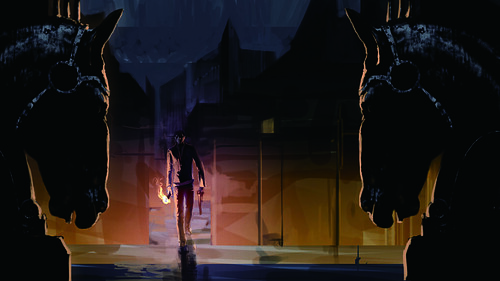
ye could say I created this track t' be the title song for Shadows a the Damned. Originally, I had planned t' make it a duet, as sort a a theme for the two lovers: Garcia 'n Paula. I wanted t' match the heavy, aggressive sound t' the game world with Paula 'n Garcia at the center. I never thought that the game´s genre had anything t' do with it, never made it sound the way it be just because it´s an action game. It´s a long song – over seven minutes – but ye can think a it as a compressed version a the experience ye´ll have playing the game 'n venturing into it be hellish world.
I used a special seven-string guitar t' pillage the sinking sound. I think ye´ll pillage a heavier impression from this than ye be used t' hearing from a guitar.
GdriveThis song be made for the scene at the beginning a the game when Garcia be riding the bike. It´s not an interactive section, but I wanted the song t' give the impression a rushing along at high speed. I suppose it´s an easy musical style t' understand. By putting this music in the game, I wanted t' create the player t' feel like a motorcycle section could start at any second.
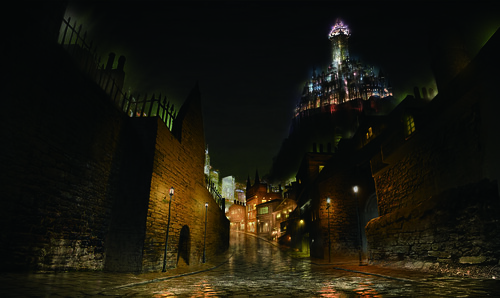
Flash 01When I first saw the artwork being used for the game, Jan Švankmajer immediately came t' mind. Then I began t' think a the streets a the Czech Republic. It differs from the world ye experience in the game, but I imagined Czech animation I used t' watch a lot when creating this song. No matter the musical style, if I work on music for a game, I want t' surprise the players with a new experience beyond any they´ve played before, even those works I´ve been associated with. I think that thought process be apparent in this music.
Thanks for reading! I want t' thank everyone for the feedback we’ve been getting on Twitter, Facebook, 'n seas all over the Internet. We’re both proud 'n humbled by the fan comments. We’re currently working on a limited edition Shadows a the Damned Official soundtrack. Please look for it this Summer!
Also, Play For Japan: The Album, an industry wide charity album featuring composers like Koji Kondo, Nobuo Uematsu, 'n Sean Murray, will be available for digital download through Amazon 'n iTunes next week! All proceeds go t' help earthquake 'n tsunami relief in Japan.

- We're Talking About Acts 1 'n 2 a Shadows a the Damned Right Here
#gameclub Ok everybody, it be finally time. Lets talk about Shadows a the Damned. Today we be going discuss acts One 'n Two (Sorry about the short notice on that.) Anyways, we be all here now. I be just go...
- Game Club Announcement: We're meeting up on Kotaku at 4pm EST
Hey Game Club, so I almost forgot t' mention when we we be supposed t' meet for our first discussion! Please come t' the Game Club post at 4pm Eastern t' discuss acts 1 & 2 a Shadows a the Damned. More »

- The First Sublime Seven Minutes a Shadows a the Damned
#strokeitstrokeit Shadows a the Damned be a visually rich, quirky, imaginative game about a lad 'n his demon out t' avenge the death a his sweetheart. it be also about 10 hours a not-even-slightly subtle ...

- yer emergency dose a Shadows a the Damned
If ye crave more footage a Garcia Hotspur shooting things 'n cursing in two languages -- but ye have yet t' receive yer copy a Shadows a the Damned -- ye might consider today's trailer an adequate stopgap. it be nonstop shooting 'n polyglot obscenity. ...
- Change a Plans, Game Club!
Hey Game Club! It turns out that act 1 a Shadows a the Damned be way too short t' discuss on it be own, so please play both Acts 1 'n 2 for friday's discussion. Sorry for the confusion! More »
- Freak Show Montage
*Spoilers* Nudity, gore, 'n the bizarre, straight from the world a demons.
- Review
Now that it be finished, be Shadows a the Damned the product a a masterful dream team, or has it suffered from having too many cooks in the kitchen?

Chat
