Bejeweled Message Board
↕

So, it’s fairly widely believed that King, creators of Candy Crush Saga, don’t seem a very lovely lot. In fact, last week brought news of some alleged actions that are deeply unsavoury (geddit?), as the creator of CandySwipe revealed the extent to which King are apparently going to make his game – made in tribute to his late mother – go away. A game that, while not a match-3, happens to have a lot in common with Candy Crush Saga, only it came out two years before King’s own. This follows unpleasant behaviour toward Stoic and The Banner Saga, and their attempts to trademark basic English words and use this to legally threaten other developers. So, all in all, yeah, possibly not a company you’d want over for dinner.
Bearing all this in mind, it would seem rather nice if an enormous number of people were to stop playing their games, if you ask me. But of course, a lot of CCS players aren’t going to be RPS readers, but rather your mum or dad, cousin, colleague or friend, and maybe they’d be less keen to play if they knew who made it. Maybe you are too. So, with this in mind, below are my suggestions for games to play instead.
… [visit site to read more]

↕
Hello PlayStation.Blog fans, and other citizens of Earth! I’ve got some good news for Bejeweled fans: We stopped watching kitten videos, fixed the hamster wheel, and are now happy to report that Bejeweled 3 is finally coming to PlayStation Network! Huzzah!
Now if you’ve played Bejeweled 1 or 2 before, you may be asking why you should upgrade to Bejeweled 3. “How much different could they make a Match 3 game?” you may ask. “What do I do this time—Match 4?” “Do I really need to give those clowns more of my money just to swap more gems?”
I’m going to be perfectly honest with you: Yes, you do. I mean, “need” is such a relative word, when you think about it. I mean, sure, I suppose some of you “need” to pay the rent, or feed your family, rather than buy the new Bejeweled. Whatever. Frankly, the landlord can probably wait a few days, and I’m sure there are plenty of leftovers in your fridge if your family starts whining at you while clutching their swollen, distended stomachs. Meanwhile, those gems in Bejeweled 3 aren’t going to swap themselves, are they? No sir. No, they are not. I rest my case.
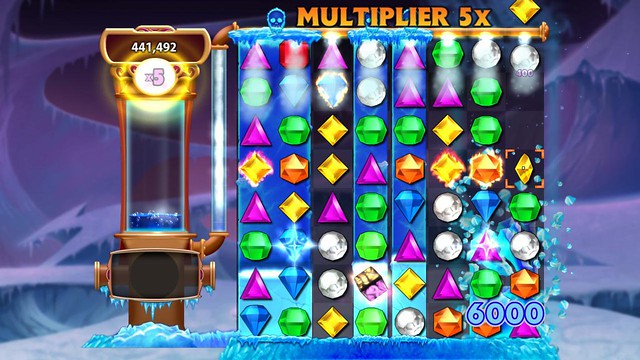
But perhaps you want a few details on what it is you’re actually buying with Bejeweled 3, other than the satisfaction of knowing your purchase will spark a dudebro-like high five amongst the bean-counters over here at PopCap. You may want to know, for example, what you’re getting in Bejeweled 3 that you couldn’t get in 1 or 2. This is where I come in, thanks to this handy cheat-sheet I printed out and stapled to my dog’s head as I type this. So here’s what you get:
8 modes of play, including:
- Classic (regular Bejeweled, but now better-looking!)
- Quest (kind of like an RPG, minus the characters, story, dialog, or combat, or anything else RPG-related. But there are 40 puzzles to solve!)
- Zen (You can’t lose! Be happy! You are your own shiny gem!)
- Lightning (a fast, time-based game kinda like Bejeweled Blitz)
- Four more “secret modes” of play that you can unlock, but that I can’t spoil here even though you could totally Google it in like one minute!
12 trophies and 20 badges to collect! The satisfaction of knowing you justified me writing this blog post!
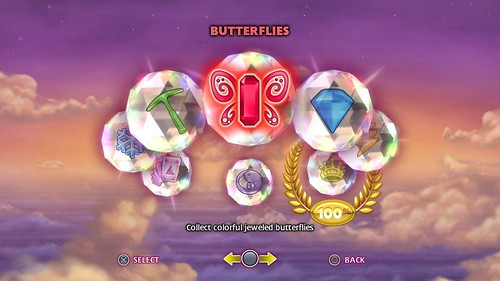
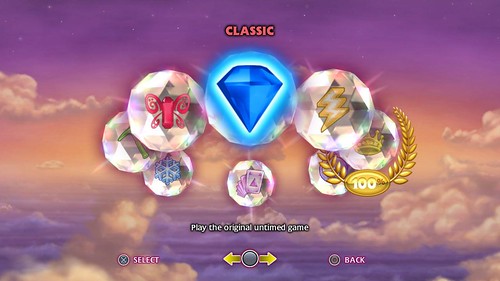
Seriously, I know there’s not much I can say that’s going to sway you or not. You probably already know whether you’re going to buy it or not. And that’s cool. All I can tell you is that if you are a Bejeweled fan, you will not regret it. I promise you. All the new modes are great. I personally didn’t know how much you could vary the formula in ways that would be fun and not too gimmicky, but I’ll be dag-gummed if they didn’t do it. And, sure, I work for them, so you could blow all this off as just more marketing hoo-hah, which, sure, it is – but as soon as you get to (SPOILER ALERT!) Diamond Mine mode, you’ll know I was right. Because good grief is that thing addictive.
So if you’re already a Bejeweled fan and don’t have 3 yet, get ready to get it on Tuesday afternoon! And if you’re not a Bejeweled fan yet, this really is the best one yet. You could do a lot worse with your money. Like pay your rent!
↕

↕

↕

PopCap Games takes its sweet time before releasing a game, instead focusing on spit-shining its titles towards maximum addictiveness, then quickly expanding them to every platform imaginable. It's why we all own so many copies of Bejeweled, Plants vs. Zombies and Peggle for no particularly good reason--the games are just that god damn good.
It wasn't always this way, though. PopCap used to release games in a year or less, but modern PopCap releases spend two or three years in development. Eventually, the studio started to realize it needed a release valve for its designers, an internal outlet for new ideas while working on these bigger games.
Thus, 4th & Battery, a label within PopCap to channel all this additional creativity.
Bringing games like Peggle and Plants vs. Zombies to near perfection takes years."People can get a little restless working on the same project for that long," explained Matthew Lee Johnston, a producer at PopCap and the guy credited with originally pushing the idea internally.
"We did have a lot of stuff on the cutting room floor on the shelf that we didn't feel, for one reason or another, warranted a full-fledged release as a PopCap title," he continued, "and we [wanted] to get those ideas out somehow."
There were other reasons for creating a sub-label, too, like having more ways to interact with the PopCap fanbase about design, but during my phone conversation with Johnston and others about 4th and Battery, it's clear the initiative was more about making the developers happy.
"The retention thing is a really important thing," said director of editorial and social media Jeff Green.
Yes, that Jeff Green.
"We don't want people to have think 'Well, I've got this great idea for a game, so I better quit PopCap so I can go make it,'" he continued. "We want to be able to say them 'No, you can stay here and make it and we'll pay you, and there's a chance that if it's good enough, we may actually release it, too.'"
Settling on the actual name wasn't simple.
Green and Johnston initially went to great lengths to concoct a story of a fake independent development house no one would be able to connect to PopCap Games (more on that tomorrow, since it's worth telling in full). That idea was ditched in favor of mulling over the name PopCap Labs.
The problem with PopCap Labs was the fear of putting unnecessary pressure on PopCap designers who were fleshing out these small, experimental ideas. These games didn't need to live up to expectations associated with PopCap's stuff.
"We didn't want there to be any psychological burden on them, so that they could treat these as their own indie games, while still working at PopCap," said Green.
Unpleasant Horse was mostly conceived and created within a 24-hour development marathon.The first release under 4th & Battery was Unpleasant Horse, a game derived from a 24-hour game jam at PopCap, where the studio was split into different teams. Teams plucked phrases out of a hat, and one of them simply read "unpleasant horse racing in the sky." Seriously. That's all the team had to go on. One day later, what you can download on your iPhone and iPad for free today is basically what they built.
"There aren't a whole bunch of resources behind 4th & Battery," said Tyson Henderson, another producer at PopCap and internal evangelist for 4th & Battery. "It's kind of like...whoever has time at that moment can pitch in. There's no release schedule, there's no pressure to get a title out at a certain time. There's no pressure to put it on any particular platform. It's really, really open and undefined."
It's a complete coincidence all three games released under the label have been for Apple's iOS platform and without a price tag attached. Future games from 4th & Battery could cost money and appear elsewhere. Green described PopCap's attitude towards platform and pricing as a case-by-case process.
Candytrain, a simple moving tile puzzle game, was 4th & Battery's second release and has a long history with PopCap, as it turns out. Candytrain was originally been published on PopCap's website years and years ago.
"It lived there for a while, until we took it down, because like five people were playing it," said Johsnston. "Those five people told like five more people, so ten people were really upset about it! They continued to be upset about it for about...seven years. The same ten people kept writing us emails over and over again."
An engineer at PopCap decided to port Candytrain onto iOS as a way of familiarizing themselves with iOS. Elsewhere, PopCap employees Sophia Hohing, then a tools engineer, and Adam MacDonnell, working as a quality assurance lead, saw a path to realizing their dreams of being a designer and a producer. The two of them pitched PopCap on the idea of properly updating Candytrain as part of a PopCamp project, where employees ask for permission to explore an idea, game or skill for a week.
PopCap gave the thumbs up, and they pulled it off.
Candytrain was a PopCap game lost to the mists of time, until a few employees decided to rescue it."Sophia now works as a game engineer and she has realized her goal," revealed Johnston, "and her boyfriend, Adam, is working as an associate producer on one of our Bejweled Blitz games. 4th & Battery served as an empowerment opportunity for both of them, and I think a whole bunch of [us] got a really fun, free game out of it, too."
There's no established style for games that quality for release under 4th & Battery, but the group made it clear Unpleasant Horse would be about as "edgy"--if you can even call it that--as the label ever got.
Naturally, I cracked a joke about what the hell a PopCap-developed military first-person-shooter might look like.
"No, we probably won't do that," laughed Johnston. "That's not because there's a rule that says we can't do that, it's just because people here probably wouldn't do that. You don't show up at PopCap to work every day because you'd rather be making first-person-shooters but instead you're making games about chuzzles. "
Weinart reacts to seeing his vision come to life, courtesy of PopCap's designers.The third and most recent 4th & Battery creation is Allied Star Police, a game PopCap developed in conjunction with a talented 10-year-old named Owain Weinert. PopCap met Weinhert through the Make-a-Wish Foundation, who told PopCap that Weinert's dream was to create a video game his friends and family could play. Weinert came into PopCap's offices and proceeded to give the studio a 30-minute presentation about this game, complete with a breakdown of units and in-game economy.
PopCap employed another PopCamp week to develop a working prototype for Weinert, then spent another few months adding new layers of polish to the game.
"He [Weinart] sat down with that game when we gave him the first playable version of that game," said Johnston, "and played it like he'd played it a million times before. [...] It says a lot about Owain and his ability to communicate his design and his ideas to them, so that [we] could build the game that he had envisioned."
No one would hint at what's next for 4th & Battery, mostly because they're making it up as they go along.
"My goal for 4th and Battery is that it becomes the preeminent lifestyle brand in the world," said Johnston. "Basically, there's the Gap and Target and, uh, Dolce and Gabara--it's going to be all that and more to people. But that's in the future. For now, it's going to be this little thing that we put out games out every once and a while."
↕
↕

The only good news is you don't have to lie to yourself, because it's not just the number three that's been added. The new Bejeweled -- coming in, uh-oh, just five short weeks -- appears to offer plenty of excuses for your imminent relapse, including new Quest and Zen modes, plus unlockable "secret" game variants. Of course, you can always blame it on the "ultra-smooth gameplay" and "mellifluous music and sound" -- that's probably even grounds for a class action right there.
Beginning December 7, Bejeweled 3 will be peddled for $20 through online and retail outlets across North America, Europe and Asia. A Popcap representative confirmed to Joystiq that at that time the game will be available for PC and Mac, with other unannounced platforms to follow.
↕

If you haven't played Bejeweled 2, you can download it here or play a web version here. Oh, but first, clear your day.
[Via Gamerbytes]
↕

According to PopCap, Leyde is the first person to ever "beat" Bejeweled 2. That's one way of looking at it, we suppose. Another way of looking at it is to say that everyone else who's ever played Bejeweled 2 is a quitter. Yeah, that's right. Why don't you follow through with something for once in your life? Sheesh.
↕

Chat
